War and Order
- 3.9
- Rating
- 50.00M
- Installs
- Free
- Price

 Analysis by App-foxy
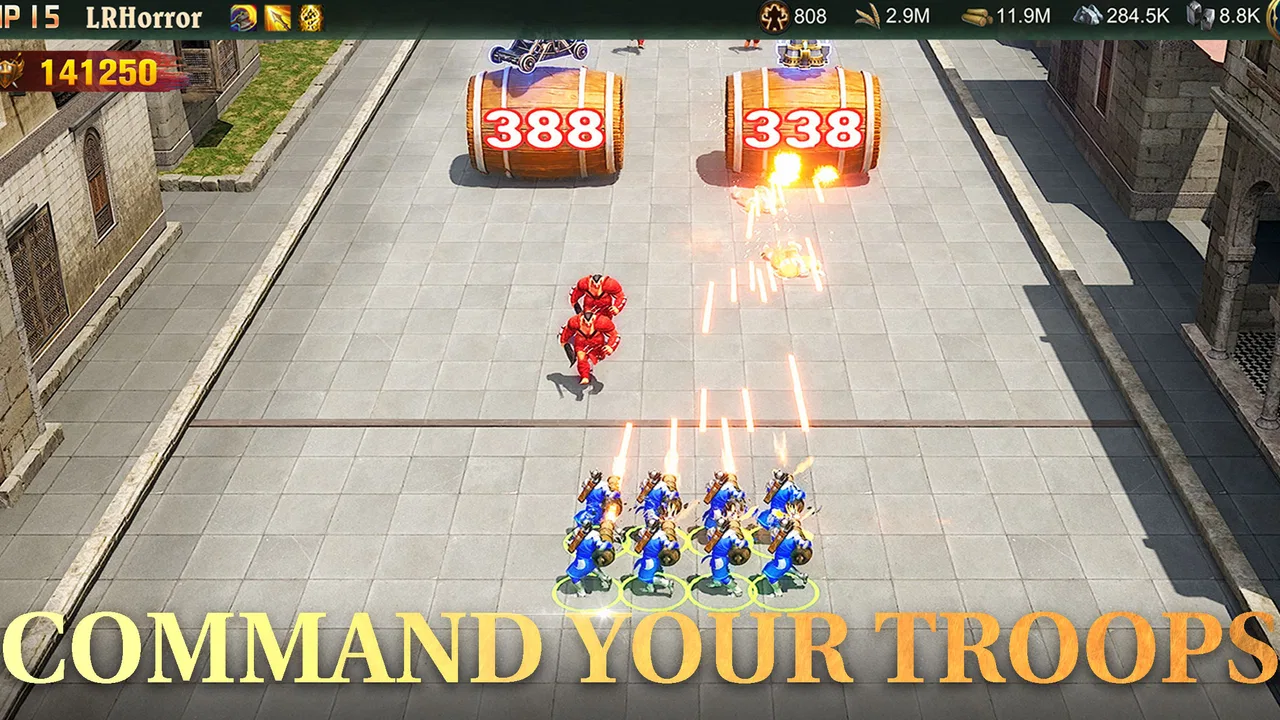
War and Order is a fantasy strategy game from CamelStudio that puts empire building and worldwide battles into a mobile format. I found its appeal easy to understand: there is always something to improve, protect, or plan, and the mix of orcs, elves, and large fantasy visuals gives the usual base-building routine a stronger identity than a plain medieval setting.
It is free to download and aimed at Teen players. The game has been available since April 5, 2016, and its current version is 4.0.65, with Android support starting from version 7.0. That long presence matters because this is not a small experimental strategy title; it is an established game with a large audience, reaching over 50 million installs and gathering an average rating of 3.9 from around 536 thousand ratings.
My overall impression is mixed in a useful way. I enjoyed the sense of building toward a stronger fantasy kingdom, but I also felt the familiar pressure that comes with free-to-play strategy games. The early experience is approachable, while the longer you stay, the more carefully you need to manage time, attention, and spending. If you like planning around upgrades and can accept a slower pace, it can become a satisfying daily game. If you want a complete strategy experience without timers, competitive pressure, or purchases, it is probably not the right fit.
You May Also Like

 Blood Strike: 2.5 Anniversary
Blood Strike’s Loadouts Turn Every Drop Into a Tactical Gamble
A close look at Blood Strike’s custom loadouts: how fast access to signature weapons reshapes its battle royale rhythm, rewards preparation, and narrows the gap between fights.

 Pandora - Music & Podcasts
Pandora’s Music Is Easy to Start, but Harder to Recover
Pandora’s strength is its low-effort path from a seed to a station. Its weak spot is how much confidence it asks you to place in connection, setup, and quiet recovery.

 8 Ball Pool
 Is Built on Rivalries, Rematches, and Routine
A close look at the rivalries, rematches, shared routines, and unanswered safety questions that turn a quick pool match into a persistent mobile community.

 Samsung Music
’s Quiet Strength Is Playing What You Already Own
Its reach comes less from spectacle than from dependable access to a personal library. That simplicity is both the app’s strongest retention engine and its ceiling.

 AccuWeather: Weather Radar
AccuWeather Review: A Quick, Clear Forecast for Everyday Decisions
For everyday plans, the best forecast is the one you can understand quickly. AccuWeather makes rain timing, radar, and local conditions easy to act on, with a few trade-offs.

 Hill Climb Racing
Why Hill Climb Racing Still Turns Crashes Into One More Run
A tiny car, a bumpy hill and one more upgrade: Hill Climb Racing keeps resurfacing because its simple chaos makes every near-miss feel personal.
More From Our News Desk
View All News


Building an empire without losing track of the small decisions
The central pleasure comes from turning a modest settlement into something that feels organized and powerful. The fantasy setting helps each improvement feel more meaningful than simply raising numbers on a spreadsheet. Orcs and elves give the world a recognizable personality, while the visual presentation makes the growing empire easier to care about.
I recommend approaching the opening phase as a learning period rather than rushing to maximize every available upgrade. New players can easily spread resources across too many buildings or improvements. I had better results when I chose a clear priority, kept the economy moving, and treated each upgrade as part of a wider plan instead of tapping every glowing button immediately.
That habit becomes especially useful when the game asks you to balance development with military preparation. A settlement that looks impressive can still feel vulnerable if all attention has gone into construction. On the other hand, focusing only on battles can leave the wider empire underdeveloped. The most enjoyable decisions sit between those extremes: improve the parts that support your next goal, then avoid spending everything just because a new option appears.
A practical everyday routine is to open the game during a commute or lunch break, start the longest sensible improvement, check what can be collected, and leave with a plan for the next visit. Later, I return to make a smaller adjustment or prepare for another activity. That rhythm suits mobile play well, but it also means the game works best when you enjoy returning regularly rather than playing one uninterrupted session.
Why the fantasy setting matters more than it first appears
The orc-and-elf theme is not just decoration. It gives the empire a clearer emotional hook and makes the battlefield easier to read than a generic collection of buildings. I found myself remembering goals in terms of the kingdom I was shaping, not only in terms of resource totals. The graphics also help the game feel more ambitious on a phone screen, particularly when several parts of the fantasy world are visible at once.
Still, attractive presentation should not be confused with a simple experience. The number of choices can become demanding as the settlement grows. Players who prefer a compact game with a short campaign and a definite ending may find this structure repetitive. The world is designed for ongoing development, so the satisfaction comes from gradual progress rather than reaching a final conclusion.
One useful discipline is to decide what kind of player you want to be before the game starts asking for more of your time. You can treat it as a relaxed builder, a more competitive planner, or something between the two. Trying to compete aggressively while playing only occasionally is likely to feel frustrating. A slower personal target—such as improving the settlement a little each day—makes the same systems feel much more manageable.
Free entry, but a paid economy deserves attention
The game is free, which makes it easy to test without committing money at the beginning. That is a genuine advantage: you can see whether the fantasy setting, upgrade loop, and battle focus suit you before deciding how seriously to take it. However, the presence of purchases ranging from $0.99 to $394.99 per item is important context for anyone who wants to keep spending under control.
I would not recommend entering with the assumption that every purchase is necessary. A better approach is to play long enough to understand which parts you actually enjoy, then set a personal limit before buying anything. Small purchases can feel harmless when viewed one at a time, while repeated decisions can change the cost of the experience. The upper end of the listed purchase range is particularly significant for families sharing a device or for players who are prone to impulse spending.
For younger players, the Teen content rating is another reason to use device-level purchase controls and discuss spending expectations in advance. That is not a criticism of the fantasy theme itself; it is simply sensible protection when a free game presents optional paid items. I prefer games that make it easy for me to separate entertainment from financial pressure, and this is one area where self-imposed boundaries are valuable.
Progress, pressure, and the question of fair competition
The longer-term loop is built around choosing what deserves attention first. That makes the game more interesting than a simple tap-and-collect title, but it also creates pressure. When progress slows, the temptation is to look for a shortcut. In a competitive environment, that temptation can feel stronger because another player’s development becomes a comparison point.
My advice is to measure progress against your own previous position whenever possible. That sounds simple, but it changes the mood of the game. Instead of seeing every delay as a failure, I could treat it as time to prepare, reorganize, or save for a more useful improvement. This approach is especially helpful for players who do not intend to spend money.
The competitive side is where the biggest fairness question appears. War and Order is built around battling other players worldwide, so the experience is not only about decorating or expanding a private kingdom. Any multiplayer strategy game with optional purchases can create concern about whether time, planning, or spending has the greatest influence. The purchase range confirms that paid items exist, but it does not by itself prove exactly how every purchase affects competitive outcomes.
Because of that, I would avoid describing the game as automatically fair or automatically pay-to-win. My honest view is more cautious: free players should expect to think carefully about their goals and accept that competition may feel more demanding than personal development. If your enjoyment depends on having an equal footing with every opponent, this uncertainty is a meaningful drawback. If you are comfortable treating battles as one part of a broader empire-building game, the pressure is easier to live with.
How I would play without overspending
I would begin by turning off impulsive purchasing habits and deciding whether the game is earning more of my time before it earns any money. I would also avoid buying simply because an upgrade is inconveniently slow. Waiting can be frustrating, but it gives me a clearer picture of the normal pace and helps distinguish a useful purchase from a momentary reaction.
Another practical tip is to keep a short list of priorities outside the game. I would note the next major improvement, the resources it needs, and the reason it matters. This prevents me from spending resources on attractive but low-impact options. It also makes short sessions feel productive because I can return with a specific task instead of wandering through menus.
For competitive play, I would start cautiously and observe how much commitment the game requires before treating it as a serious contest. A player who can check in regularly may have a different experience from someone who opens the game once every few days. That difference is not a flaw in the player; it is a consequence of choosing an ongoing strategy game. If your schedule is unpredictable, personal empire growth is likely to be more enjoyable than chasing the top of a competitive ladder.
What remains unclear before you commit deeply
The purchase information tells me the available items can cost from less than a dollar to several hundred dollars, but it does not explain the exact value, frequency, or competitive effect of each item. I would therefore make any spending decision slowly. The sensible test is whether the game remains enjoyable when played within a fixed budget, not whether a purchase can remove an immediate inconvenience.
The same caution applies to fairness. The worldwide battle focus makes competition central, yet a store summary alone cannot answer every question about matchmaking, the balance between free and paying players, or how much skill can offset a stronger account. I would not make the game my main competitive hobby until I had personally experienced those systems for a while.
There is also a difference between asking whether the game can be played for free and asking whether the entire experience feels equally comfortable for free players. The first answer is yes, since the game has no download price. The second depends on your patience, goals, and tolerance for slower progress. Those are separate questions, and confusing them is one of the easiest ways to become disappointed.
The large audience—more than 50 million installs, with roughly 34 thousand written reviews—suggests that the game has attracted sustained interest. I see that as a reason to try it, not as proof that it will suit everyone. A popular strategy game can still be the wrong choice for someone who dislikes persistent upgrades, online competition, or purchase prompts.
Who should play it, and who should choose something else?
I think War and Order is best for players who enjoy fantasy worlds, gradual empire growth, and making decisions across several visits rather than finishing everything in one sitting. It is also a good match for people who like the idea of worldwide battles but are willing to learn the game before competing seriously.
I would recommend skipping it if you want a self-contained strategy campaign, a purely offline experience, or a game where spending has no place at all. Someone looking for quick tactical matches may prefer a turn-based battle game, while someone who wants relaxed construction without confrontation may be happier with a dedicated city builder. Compared with those alternatives, this title gains energy from its ongoing competition but loses some simplicity and predictability.
It is also not ideal for players who dislike checking timers or maintaining a long-term routine. The game rewards attention over time, and that can feel like an obligation if you already have several daily games. I found it more enjoyable when I gave it a defined place in my schedule instead of allowing it to demand attention whenever something became available.
My trust verdict after weighing the fun against the pressure
War and Order succeeds when I approach it as a patient fantasy empire project. The combination of orcs, elves, strong visuals, construction, and worldwide battles gives it a clearer identity than many interchangeable strategy games. CamelStudio has created a title with enough depth to keep a planning-minded player interested beyond the first session.
My reservations are just as important. The Teen rating and free entry make it approachable, but the in-app purchase range—from $0.99 to $394.99 per item—means spending deserves deliberate boundaries. The game’s competitive design also leaves an important practical question for players who care deeply about equal footing: paid options are confirmed, while their exact influence on every competitive situation is not something I would assume.
With an average of 3.9 from around 536 thousand ratings, the reception looks solid but not universally enthusiastic. That matches my experience: there is real enjoyment here, but it depends heavily on whether the ongoing structure fits your habits. The current version, 4.0.65, and support for Android 7.0 or later make it accessible to many Android users, while the free download makes trying it relatively straightforward.
My recommendation is to try it as a free, controlled experiment rather than a commitment. Play long enough to understand the normal pace, decide whether the battles add excitement or stress, and set a spending limit before the game gives you a reason to act quickly. If you enjoy returning to a growing fantasy kingdom and making careful choices, it can become a rewarding mobile strategy routine. If fairness, fixed costs, or a clear ending matter more to you, a premium strategy game or a self-contained tactical alternative will probably be the better choice.
FAQs for War and Order
01What is the main objective of War and Order?
War and Order is a strategy game where players build empires by constructing buildings, training armies, and forming alliances. The main objective is to expand your territory, defeat enemies, and rise to power by managing resources and devising strategic plans in real-time battles.
02Is War and Order free to play?
Yes, War and Order is free to download and play on both Android and iOS devices. However, it offers in-app purchases that can enhance gameplay by providing additional resources, upgrades, and customizations. Players can choose to spend money for a faster progression or play for free with a gradual advancement.
03What are the system requirements for War and Order?
For Android users, War and Order requires a device running Android 4.0.3 or higher. iOS users need a device with iOS 8.0 or later. It's recommended to have a stable internet connection and sufficient storage space to accommodate updates and ensure smooth gameplay experiences.
04How does multiplayer functionality work in War and Order?
War and Order features a robust multiplayer component, allowing players to join alliances and collaborate with others globally. You can engage in alliance-based battles, participate in events, and communicate with teammates via in-game chat. Building strong alliances is key to success in large-scale wars.
05Are there regular updates and support for War and Order?
Yes, the developers of War and Order regularly release updates to introduce new features, fix bugs, and enhance gameplay. They also provide customer support to address player queries and issues. Active community engagement ensures the game evolves and remains engaging for its users.
Pros
- Engaging real-time strategy gameplay.
- Stunning graphics and animations.
- Robust alliance and social features.
- Frequent updates with new content.
- Deep strategic elements and planning.
Cons
- Requires a stable internet connection.
- Can be time-consuming and addictive.
- In-app purchases can be pricey.
- Steep learning curve for beginners.
- Notifications can be overwhelming.

War and Order
Gallery